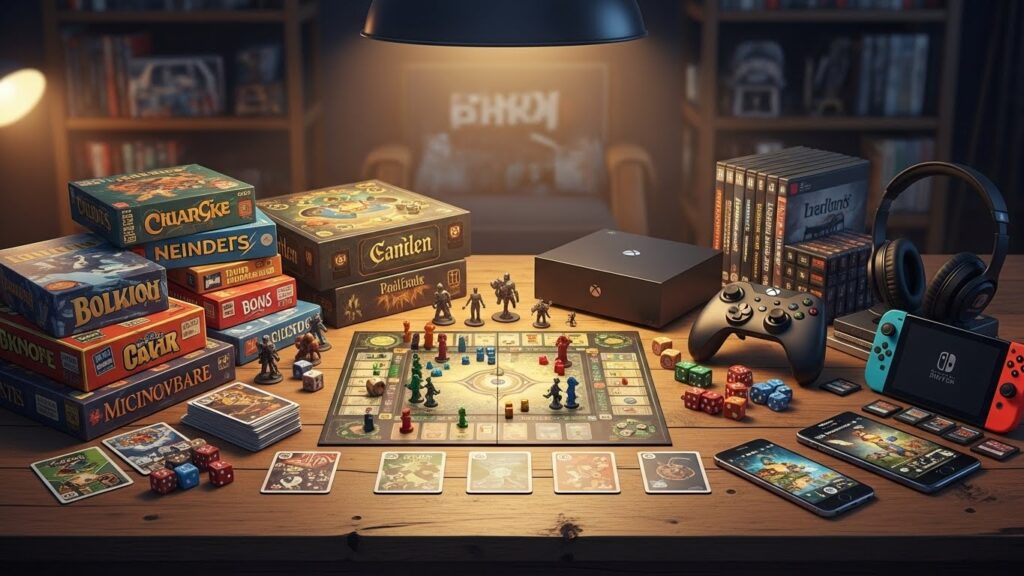
Games have been a fundamental part of human culture for centuries, serving not only as a source of entertainment but also as a medium for learning, storytelling, and social interaction. From simple board games to intricate digital universes, games offer experiences that challenge our minds, engage our senses, and connect us with communities around the world. Today, the gaming industry has grown into a global phenomenon, driven by technological innovation, creative storytelling, and evolving player expectations.
In this blog, we will explore the fascinating world of games, examine their evolution, discuss popular genres, understand their impact on society, and look toward the future of interactive entertainment.
The Evolution of Games: From Ancient Pastimes to Digital Adventures
Games have been part of human civilization since ancient times. Early examples include board games like Senet in Egypt, Go in China, and Chess in India. These games served as entertainment but also encouraged strategy, critical thinking, and social interaction. As societies evolved, so did games, reflecting cultural values, technological progress, and human ingenuity.
With the rise of computers and home consoles in the late 20th century, games transitioned from physical boards and cards to digital formats. Early video games such as Pong, Space Invaders, and Pac-Man captured the imagination of players and laid the foundation for the modern gaming industry. The 1990s brought more sophisticated consoles, including the Nintendo 64 and PlayStation, introducing 3D graphics, richer storylines, and multiplayer experiences.
The advent of the internet in the early 2000s revolutionized gaming further. Online multiplayer games allowed players to interact with each other in real time, leading to the rise of genres like massively multiplayer online role-playing games. Mobile technology further expanded accessibility, enabling millions of people to play games anytime, anywhere, creating a gaming culture that is deeply integrated into daily life.
Types of Games: Exploring Popular Genres
The gaming world is diverse, offering something for virtually every taste and skill level. Understanding the main genres helps illustrate how games cater to different interests and motivations.
Action and Adventure Games
Action and adventure games are among the most popular genres, combining immersive storytelling with engaging gameplay. These games often involve exploration, puzzle-solving, and combat. Titles such as The Legend of Zelda series, Tomb Raider, and Red Dead Redemption highlight the best of this genre, offering players expansive worlds to explore and complex narratives to unravel.
A key feature of action-adventure games is their ability to blend multiple experiences into one. Players may engage in combat, solve environmental puzzles, or interact with intricate storylines. This genre appeals to those who enjoy a balance of excitement, challenge, and narrative depth.
Role-Playing Games
Role-playing games, or RPGs, emphasize character development, strategic thinking, and narrative choices. In these games, players often control a character or a party of characters, making decisions that impact story outcomes and gameplay progression. Classic RPGs like Final Fantasy, Skyrim, and The Witcher series provide detailed worlds, quests, and character progression systems that encourage long-term engagement.
MMORPGs expand on this concept by allowing thousands of players to interact in shared virtual worlds. Games such as World of Warcraft exemplify this, offering social interaction, collaborative quests, and competitive challenges. RPGs are beloved for their depth, complexity, and ability to immerse players in intricate, living worlds.
Strategy Games
Strategy games challenge players to think critically and plan ahead, often requiring resource management, tactical thinking, and careful decision-making. This genre includes both real-time strategy games, like StarCraft and Age of Empires, and turn-based games, such as Civilization. Players must balance short-term goals with long-term strategies, making each decision impactful and meaningful.
Strategy games appeal to players who enjoy mental challenges and problem-solving. The rise of competitive esports has also brought games in this genre to professional levels, with tournaments attracting global audiences and offering significant prizes.
Simulation Games
Simulation games aim to replicate real-world or imaginative experiences with high fidelity. Players can simulate careers, manage cities, run businesses, or even create entire virtual worlds. Examples include The Sims series, SimCity, and farming simulations like Stardew Valley. These games provide a sense of control and creativity, allowing players to experiment in environments that may be impossible in real life.
Simulation games also often serve educational purposes. For example, flight simulators teach aspiring pilots, while strategy simulations can improve management and planning skills. The appeal lies in the ability to experiment, create, and learn within safe digital environments.
Sports and Racing Games
Sports and racing games replicate physical activities and competitive experiences. Titles such as FIFA, NBA 2K, and Madden NFL allow players to simulate professional sports, managing teams, playing matches, and competing in tournaments. Racing games, including Gran Turismo, Need for Speed, and Forza Horizon, combine speed, precision, and strategy, offering players thrilling high-speed experiences.
These games appeal to both casual and competitive players, providing opportunities for skill development, social interaction, and friendly competition. They also bridge the gap between physical sports and digital entertainment, creating new ways for fans to engage with their favorite games and athletes.
Puzzle and Casual Games
Puzzle and casual games are designed for short, accessible, and often addictive experiences. Games like Tetris, Candy Crush, and Monument Valley focus on problem-solving, pattern recognition, and strategic thinking. These games are ideal for casual players looking for entertainment without extensive time commitments.
Puzzle games also encourage cognitive development, including memory, concentration, and logical thinking. Their simple mechanics combined with escalating difficulty levels make them popular across age groups and demographics.
The Cultural Impact of Games
Games have evolved into a powerful cultural force, influencing entertainment, education, and social interactions. They are a form of storytelling, allowing players to experience narratives in interactive ways that films or books cannot provide. Games like The Last of Us or Life is Strange have received critical acclaim for their complex characters, moral choices, and emotional storytelling.
Gaming has also fostered communities and social interaction. Online multiplayer games allow players to connect with others worldwide, building friendships, teamwork skills, and collaborative experiences. Esports has further elevated gaming into a spectator activity, with professional players and tournaments drawing millions of viewers, creating an entire entertainment ecosystem.
Moreover, games can have educational and therapeutic value. Educational games help children and adults develop skills such as problem-solving, math, and literacy. Therapeutic games are used in rehabilitation, cognitive training, and stress relief. The versatility of games demonstrates their potential beyond entertainment, shaping personal development and social cohesion.
Technology Driving the Future of Games
The gaming industry continues to be shaped by technology, offering experiences that are increasingly immersive, interactive, and accessible. Virtual reality and augmented reality are transforming how players experience games, creating environments that feel real and engaging. Titles like Beat Saber and Pokémon Go exemplify how these technologies merge physical movement with digital interaction.
Cloud gaming is another major advancement, enabling high-quality gaming on devices with minimal hardware requirements. Players can stream games instantly, reducing the need for expensive consoles or high-end computers, and allowing access to expansive libraries at their fingertips.
Artificial intelligence is increasingly integrated into game design, creating dynamic environments, adaptive challenges, and realistic non-player characters. AI enhances immersion, personalizes gameplay, and allows developers to create worlds that react intelligently to player actions.
Mobile technology continues to expand the reach of gaming, providing convenient, on-the-go access and opening the market to millions of new players worldwide. Mobile games, often designed for quick sessions, have become a dominant force in the industry, blending entertainment, social features, and monetization strategies.
Challenges and Opportunities in Modern Gaming
While gaming offers incredible opportunities for entertainment and innovation, it also faces challenges. Concerns about addiction, screen time, and aggressive monetization practices have prompted discussions about responsible gaming. Ensuring that games remain safe, inclusive, and engaging for all players is a priority for developers and regulators alike.
At the same time, the industry continues to innovate, creating opportunities for storytelling, social connection, and education. Independent developers have gained platforms to share creative visions, diversifying the types of games available and pushing the boundaries of design and narrative. The continued growth of esports, mobile gaming, and virtual reality ensures that gaming remains a dynamic and evolving form of entertainment.
The Future of Games
The future of games promises to be even more immersive, inclusive, and interconnected. With advancements in virtual reality, artificial intelligence, and cloud gaming, players can expect experiences that blur the line between the digital and physical worlds. Games will likely continue to expand as social platforms, educational tools, and entertainment experiences, integrating seamlessly into daily life.
The rise of user-generated content, streaming, and esports will further democratize the gaming landscape, empowering communities and individual creators. Games will not only be products to consume but spaces to explore, create, and connect with others globally.
Conclusion
Games have evolved from simple pastimes to complex, multifaceted experiences that entertain, challenge, and connect people across the globe. From action-adventure epics to puzzle games, simulations, and esports, gaming offers something for everyone, combining technology, creativity, and storytelling in unique ways.
As the industry continues to grow and innovate, games will play an increasingly important role in culture, education, and social interaction. The transformative power of gaming lies not just in play, but in the connections, learning, and experiences it fosters. Whether you are a casual player, a competitive gamer, or a curious observer, the world of games offers endless possibilities, making it one of the most exciting forms of entertainment in the modern era.