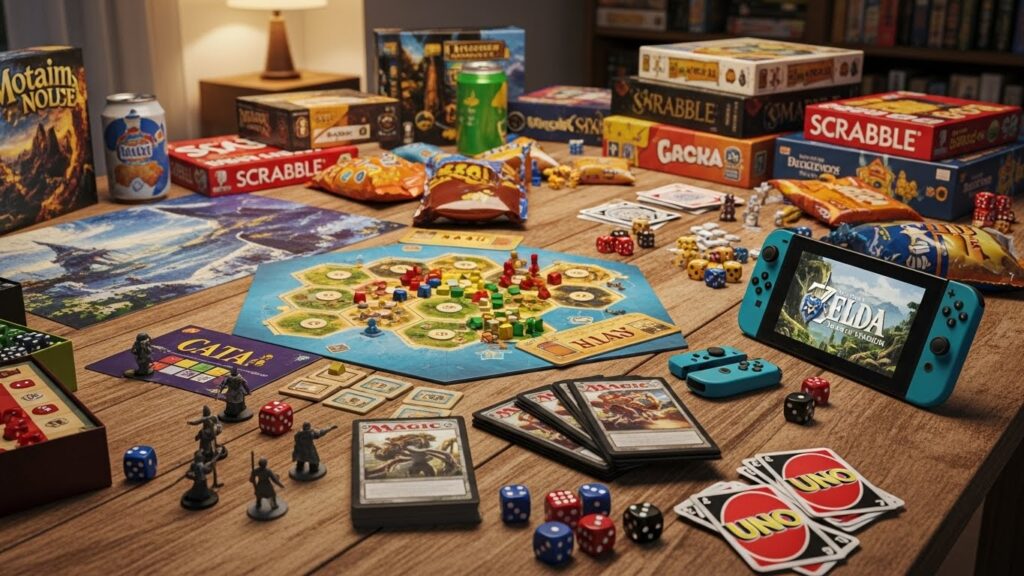
Introduction: The World of Games
Games have been an integral part of human culture for thousands of years. From ancient board games carved into stone to today’s highly interactive digital experiences, games serve as both entertainment and a reflection of human ingenuity. While often dismissed as mere leisure, games encompass complex systems that challenge the mind, foster social connections, and inspire creativity. Whether played alone or in groups, physical or digital, games provide a unique way to learn, compete, and explore worlds beyond our immediate reality.
The Evolution of Games
Games have evolved alongside civilization. Ancient cultures developed games to entertain, teach strategy, and simulate real-life scenarios. Chess, Go, and backgammon are examples of strategic games that date back centuries. With the industrial revolution and the invention of electronic devices, games transformed into video games, offering interactive digital experiences. Today, gaming spans multiple formats, including mobile apps, consoles, personal computers, and even virtual reality. Each stage of evolution has expanded the possibilities of what games can achieve, combining storytelling, strategy, and technology in innovative ways.
The Cognitive Benefits of Gaming
One of the most significant impacts of gaming lies in cognitive development. Many games challenge players to think critically, strategize, and solve complex problems. Puzzle games enhance analytical thinking, while strategy games require careful planning and foresight. Fast-paced action games sharpen reflexes and improve hand-eye coordination. Role-playing games engage memory and decision-making skills. Studies have shown that consistent gaming can enhance multitasking abilities, attention to detail, and even creativity. Far from being passive entertainment, games act as dynamic mental workouts.
Games as a Social Platform
Contrary to the stereotype of the solitary gamer, games are increasingly social experiences. Multiplayer games allow players to collaborate, compete, and communicate across the globe. Online communities thrive around shared interests in specific games, forming friendships that often extend beyond digital platforms. Team-based games foster leadership, communication, and coordination, while casual games provide opportunities for social interaction in a relaxed environment. Games create spaces for people to connect, share experiences, and build communities that are meaningful and lasting.
Storytelling in Games
Modern games are often celebrated for their storytelling. Unlike traditional media, games allow players to actively participate in the narrative. Role-playing games, open-world adventures, and interactive simulations immerse players in detailed universes where choices shape outcomes. This participatory storytelling fosters empathy, critical thinking, and emotional engagement. Players can experience perspectives vastly different from their own, making games powerful tools for both entertainment and education. Story-driven games blur the lines between literature, cinema, and interactive experience.
Skill Development Through Games
Games provide opportunities to develop both practical and cognitive skills. Strategy games teach planning and resource management, while simulation games can impart real-world knowledge such as engineering, architecture, and economics. Multiplayer games cultivate teamwork, leadership, and negotiation skills. Even games that seem purely recreational, like sports or casual mobile games, can enhance coordination, timing, and concentration. In an increasingly digital world, the skills honed through gaming are becoming relevant in professional and personal contexts.
The Psychological Benefits of Gaming
Gaming also plays a significant role in mental and emotional well-being. Completing challenges and achieving goals in games provides a sense of accomplishment and mastery. Games can reduce stress, offering an escape from daily pressures and providing a safe space for exploration and creativity. They can also foster resilience by encouraging players to try, fail, and try again. In addition, games that promote social interaction help combat loneliness, providing a supportive community for players around shared experiences and interests.
Competitive Gaming and Esports
Competitive gaming, commonly known as esports, has transformed gaming into a professional and spectator-driven industry. Players train rigorously to compete at local, national, and international tournaments. Esports has created career opportunities beyond just playing, including coaching, content creation, and event management. The rise of esports underscores gaming’s legitimacy as a professional pursuit, demonstrating the dedication, skill, and strategy required to excel. It also attracts millions of viewers, highlighting the cultural and social significance of competitive gaming worldwide.
Creativity and Games
Games are powerful catalysts for creativity. Many games encourage players to experiment, build, and invent within virtual worlds. Sandbox games, construction simulations, and creative design challenges allow players to express artistic and strategic creativity. Narrative-driven games also inspire storytelling, fan art, music, and video production. By combining imagination with structured challenges, games provide a unique platform for creative expression that blends fun with skill-building.
Educational Potential of Games
The educational potential of games is increasingly recognized. Educational games and gamified learning platforms teach concepts in science, mathematics, history, and language skills. Simulations and role-playing games allow students to experience historical events, conduct experiments, and practice problem-solving in a safe environment. Games also promote soft skills such as decision-making, persistence, and teamwork. Unlike traditional teaching methods, games offer experiential learning, making education more engaging and effective.
Games Across Cultures
Games are a universal part of human culture, yet they vary widely across regions. Traditional games reflect the values, history, and customs of specific societies, while modern games often blend cultural influences to appeal to a global audience. Cultural storytelling, folklore, and mythology often inspire game narratives, bringing diverse perspectives to players worldwide. Through games, players can experience different cultures, learn about new traditions, and develop global awareness—all while engaging in entertaining experiences.
The Impact of Technology on Gaming
Technology has been the driving force behind modern gaming. Advanced graphics, immersive sound design, virtual reality, augmented reality, and artificial intelligence have transformed gameplay experiences. Cloud gaming and mobile platforms have made games accessible to anyone, anywhere, at any time. Emerging technologies continue to push the boundaries of what games can achieve, creating more realistic, interactive, and engaging experiences. Technology allows games to evolve continuously, making them more sophisticated, inclusive, and captivating.
Challenges in the Gaming World
Despite the benefits, gaming faces challenges. Excessive gaming can lead to addiction, social isolation, and health issues such as eye strain and sedentary behavior. Concerns about violent content and online harassment remain significant issues. For creators, maintaining originality, quality, and ethical standards can be demanding in a competitive industry. Awareness and responsible practices are essential for both players and developers to ensure that gaming remains a positive and enriching experience.
The Future of Games
The future of games promises unprecedented innovation. Virtual reality, augmented reality, and artificial intelligence will create fully immersive worlds where players interact in unprecedented ways. Games may become integrated with daily life, combining entertainment, education, work, and social interaction. Personalized experiences, adaptive storylines, and cross-platform connectivity will redefine what it means to play. The potential for games to entertain, educate, and inspire will continue to grow, offering new possibilities for engagement and creativity.
Conclusion: Games as a Dynamic Force in Life
Games are far more than simple leisure activities. They are dynamic systems that shape skills, foster creativity, and connect people across cultures and generations. From cognitive benefits and emotional well-being to competitive esports and cultural storytelling, games influence nearly every aspect of modern life. Embracing games responsibly allows individuals to enjoy entertainment while developing valuable skills and forming meaningful connections. As technology and creativity continue to evolve, games will remain an enduring and transformative force in society, proving that play is not just a pastime—it is a way of learning, growing, and connecting with the world around us.