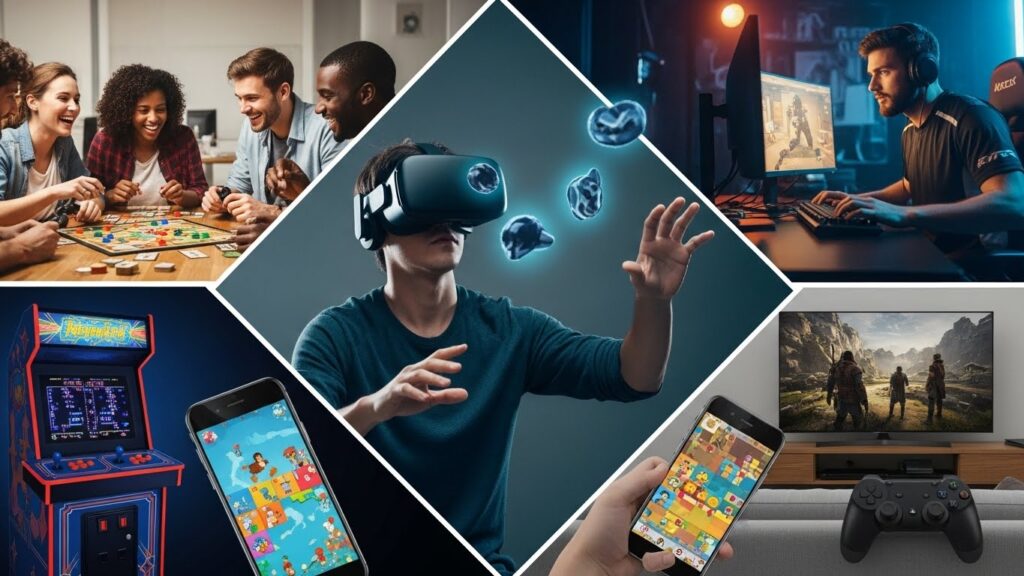
Gaming has come a long way since its humble beginnings. From the early days of arcade machines and simple console games to the immersive worlds created by modern gaming technology, the evolution of gaming has been nothing short of spectacular. Today, gaming is a multi-billion dollar industry, with millions of players around the globe engaging in everything from casual mobile games to competitive esports tournaments. In this blog post, we will explore the history of gaming, its cultural impact, the technological innovations that have shaped it, and what the future of gaming might look like.
The Origins of Gaming: A Look Back in Time
The origins of gaming can be traced back to the early 1950s, when computer scientists and hobbyists began experimenting with interactive programs for entertainment. The first notable video game, Tennis for Two, was created in 1958 by physicist William Higinbotham. It was a simple two-player tennis game displayed on an oscilloscope screen, and although it wasn’t intended for commercial use, it marked the birth of interactive entertainment.
In 1972, Atari’s Pong revolutionized the gaming landscape by introducing the concept of arcade gaming. The game’s simple yet addictive gameplay caught the attention of players around the world and became the first commercially successful video game. Pong was a milestone because it demonstrated the potential for video games to entertain and engage large audiences, laying the groundwork for future gaming technologies.
The 1980s brought about a boom in the arcade gaming industry, with iconic titles like Pac-Man, Space Invaders, and Donkey Kong taking the world by storm. These games introduced players to the concept of high scores, challenging gameplay, and social competition. The arcade culture grew rapidly during this period, with gaming becoming an important part of youth culture.
At the same time, home consoles began to emerge. The introduction of the Nintendo Entertainment System (NES) in 1985 gave players the opportunity to enjoy their favorite games in the comfort of their homes. The NES was a pivotal moment in the gaming industry, making gaming more accessible and helping to establish gaming as a mainstream form of entertainment.
The Rise of Console Gaming: From 8-Bit to 4K
The 1990s witnessed the birth of 3D gaming, thanks to the advancements in console technology. The introduction of the Sony PlayStation in 1994, along with other consoles like the Sega Saturn and Nintendo 64, marked a new era in gaming. With improved graphics and processing power, game developers were able to create more immersive and complex experiences. Games like Super Mario 64, Final Fantasy VII, and The Legend of Zelda: Ocarina of Time set new standards for gameplay and storytelling, captivating audiences with their expansive worlds, complex narratives, and engaging mechanics.
During this time, gaming began to shift from a purely leisure activity to a more serious hobby for many people. The idea of “gaming as a lifestyle” took root, with players forming communities around their favorite consoles and games. This was also the era when online multiplayer gaming began to gain traction. The introduction of the internet brought with it the possibility of connecting with players from all over the world, which would forever change the way people played games. Titles like GoldenEye 007 on the Nintendo 64 and Halo 2 on the Xbox allowed players to engage in multiplayer matches, fostering a competitive gaming culture that would continue to grow in the years to come.
The early 2000s saw the rise of high-definition gaming, with consoles like the Xbox 360 and PlayStation 3 offering 720p and 1080p resolutions. This period also saw the emergence of more sophisticated game engines, such as Unreal Engine 3, which powered games with incredibly detailed graphics. With the advent of HD, gaming became more immersive than ever before, and it was during this time that the idea of “cinematic experiences” in games became a major trend.
The Rise of PC Gaming: A More Immersive Experience
While consoles were growing in popularity, the 1990s and 2000s also marked the rise of PC gaming. Personal computers provided a platform for games that were more graphically advanced, offered higher resolutions, and could be updated with new hardware and software. Games like StarCraft, Warcraft III, and Diablo II became iconic PC titles that defined the genre of real-time strategy and action role-playing games. As technology advanced, PC gaming evolved to become a platform for more sophisticated and graphically demanding games.
The introduction of graphics cards like Nvidia’s GeForce series and ATI’s Radeon cards helped push the limits of what was possible in gaming, enabling players to experience high-definition graphics and realistic physics simulations. Games like Half-Life 2, Crysis, and The Witcher 3 showcased what PC gaming could do, with their detailed worlds, advanced AI, and complex mechanics.
Another key factor in the rise of PC gaming was the growth of online multiplayer gaming. Platforms like Steam, which launched in 2003, allowed players to digitally purchase and download games, as well as engage in multiplayer matches with others. This made gaming more accessible and social, as it allowed players to connect with friends or strangers around the world and engage in cooperative or competitive gameplay.
Mobile Gaming: The Revolution in Your Pocket
While console and PC gaming dominated for decades, the advent of smartphones marked a turning point in the gaming industry. The launch of the iPhone in 2007 ushered in a new era of mobile gaming, where casual games could be played on the go. The App Store, which opened in 2008, provided a platform for developers to create and distribute mobile games to millions of users worldwide.
Mobile games like Angry Birds, Candy Crush Saga, and Pokémon Go became massive hits, attracting players who previously might not have considered themselves “gamers.” The simplicity of mobile games, combined with their accessibility and low cost, made them popular among a broad demographic. As smartphones became more powerful, mobile games became more sophisticated, incorporating rich graphics, complex gameplay mechanics, and even online multiplayer features.
The success of mobile gaming also brought with it the rise of mobile esports. Games like Clash Royale and PUBG Mobile have gained massive followings, with competitive tournaments attracting millions of viewers. The rise of mobile gaming has fundamentally changed how we think about gaming, making it possible to play anywhere, anytime, with just a smartphone or tablet.
The Emergence of Esports: Competitive Gaming Takes Center Stage
As gaming became more popular, the competitive scene began to grow. Esports, or electronic sports, has become a global phenomenon, with professional gamers competing in tournaments for large cash prizes and fame. Games like League of Legends, Dota 2, Overwatch, and Fortnite have become the center of competitive gaming, with massive tournaments drawing millions of viewers from around the world.
Esports has also become a career path for many talented players. Professional esports organizations have formed, offering players salaries, sponsorships, and the opportunity to compete in global tournaments. Esports has become a spectator sport, with live streams on platforms like Twitch and YouTube attracting millions of viewers. In fact, some esports tournaments, such as The International for Dota 2, offer prize pools that rival those of traditional sports events.
In addition to the rise of professional players, esports has also given birth to a new generation of content creators, streamers, and analysts. Platforms like Twitch and YouTube Gaming have allowed gamers to share their gameplay experiences, interact with their communities, and build careers as influencers. This has added a new layer of entertainment to the gaming world, as players and fans alike engage in a social, interactive experience.
The Future of Gaming: What’s Next?
As technology continues to advance, the future of gaming looks incredibly exciting. Here are some key trends that are likely to shape the industry in the coming years:
- Virtual Reality (VR) and Augmented Reality (AR): As VR and AR technologies improve, gaming will become more immersive than ever before. With VR headsets like the Oculus Rift and PlayStation VR already available, players can experience fully immersive gaming worlds that feel more like real-life experiences. AR games like Pokémon Go have already shown how augmented reality can bring the gaming world into the real world, and we can expect more innovative AR games in the future.
- Cloud Gaming: Services like Google Stadia, Nvidia GeForce Now, and Xbox Cloud Gaming are making it possible to stream high-quality games without the need for powerful hardware. Cloud gaming has the potential to make gaming more accessible by allowing players to play AAA titles on devices like smartphones, tablets, and low-end PCs.
- AI and Procedural Generation: Artificial intelligence (AI) will play a bigger role in gaming, with more games using AI to create dynamic worlds and adaptive gameplay experiences. Procedurally generated worlds, where the game world is created algorithmically rather than manually, will offer players nearly infinite replayability and unique experiences every time they play.
- Cross-Platform Play: The future of gaming will likely be more interconnected, with cross-platform play becoming a standard feature. Players will be able to join games and interact with friends regardless of whether they’re playing on a console, PC, or mobile device, breaking down barriers and fostering a more inclusive gaming community.
Conclusion: Gaming’s Ever-Growing Influence
Gaming has come a long way from its early days, and it continues to evolve at a rapid pace. With advancements in technology, the rise of mobile gaming, and the growth of esports, gaming is now a global cultural force. The industry’s growth shows no signs of slowing down, and the future promises even more exciting developments. Whether it’s through new immersive experiences in VR, the rise