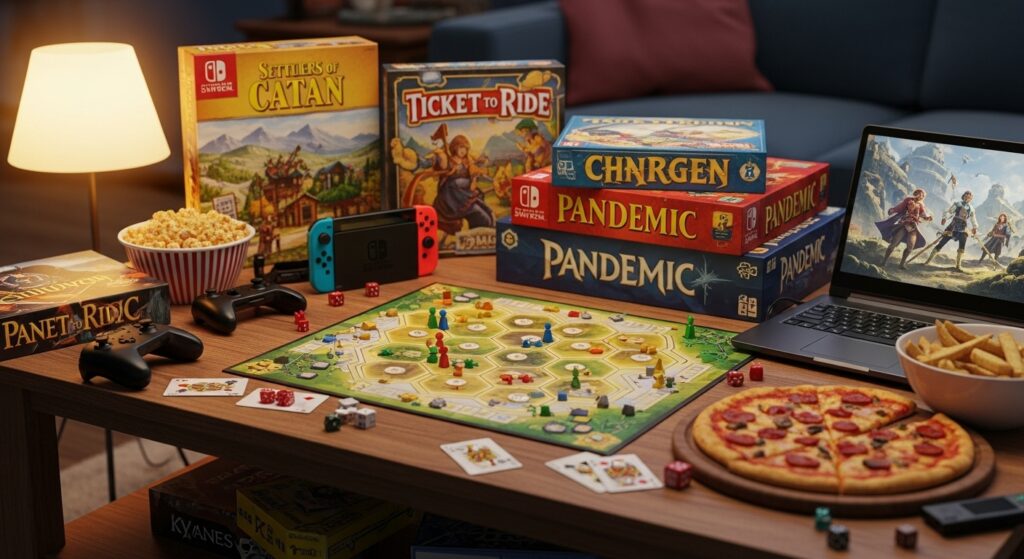
Introduction: The Universal Language of Games
Games have been an integral part of human civilization for thousands of years. From the ancient Egyptians playing Senet to the bustling arcades of the 1980s, games have served not only as entertainment but also as tools for teaching, socializing, and storytelling. Over time, games have evolved in complexity, scope, and medium, from simple board games to complex digital experiences. In the 21st century, games have reached new heights, with video games becoming a multi-billion-dollar industry, influencing everything from technology to culture. This blog delves into the transformative power of games, examining their role in entertainment, education, and the shaping of modern culture.
The Roots of Gaming: From Board Games to Digital Play
The concept of gaming is far older than the modern digital era. Early games were simple, tactile experiences designed for social interaction and strategic thinking. Ancient civilizations, including the Egyptians, Greeks, and Romans, played board games as a form of recreation and mental exercise. Senet, one of the earliest known board games, dates back to around 3100 BCE in Egypt. Games like backgammon and chess followed in the centuries that followed, offering players a blend of entertainment and intellectual challenge.
As technology advanced, so did the possibilities for gaming. The first electronic games were developed in the 1950s and 1960s, and while basic by today’s standards, they laid the groundwork for the digital revolution in gaming. The arcade era of the late 1970s and 1980s saw the rise of games like Pong, Pac-Man, and Space Invaders, introducing the concept of interactive entertainment on a screen. These simple games marked the beginning of what would become a global phenomenon.
The Rise of Home Consoles and the Gaming Revolution
The 1980s and 1990s were defining decades for the gaming industry. With the release of home consoles like the Nintendo Entertainment System (NES) and Sega Genesis, gaming transitioned from the arcade to the living room. These consoles brought more sophisticated graphics, larger game worlds, and the introduction of iconic characters like Mario and Sonic the Hedgehog, who became cultural icons.
The 1990s also saw the birth of 3D graphics in gaming, with groundbreaking titles like Super Mario 64 and The Legend of Zelda: Ocarina of Time pushing the boundaries of what was possible in video game design. These games offered immersive worlds and nonlinear gameplay, setting the stage for the expansive open-world games we know today. The rise of the PlayStation in the late 90s solidified gaming’s place in mainstream entertainment, with titles like Final Fantasy VII and Gran Turismo marking the era as a golden age of game design.
The Digital Age: The Internet and Online Gaming
The introduction of the internet in the late 1990s ushered in a new era of gaming. Multiplayer games became possible, allowing players from across the globe to interact in real-time. Early examples like Warcraft and Diablo revolutionized how people connected through games, fostering online communities and competition.
By the early 2000s, massively multiplayer online role-playing games (MMORPGs) like World of Warcraft took the concept of online gaming to unprecedented levels, with players logging in to explore virtual worlds, team up for quests, and engage in large-scale player-versus-player (PvP) battles. The social element of gaming, previously limited to local multiplayer or in-person play, grew exponentially with the advent of online play.
In addition to MMORPGs, the rise of gaming platforms like Xbox Live and PlayStation Network further expanded the scope of online gaming, enabling players to connect with friends, join online communities, and participate in global tournaments. The world of gaming became increasingly interconnected, making online multiplayer a central part of the experience.
The Growth of Mobile Gaming: Play Anywhere, Anytime
With the rise of smartphones in the 2000s, mobile gaming became a dominant force in the industry. The simplicity and accessibility of mobile games revolutionized how people engaged with gaming. Titles like Angry Birds, Candy Crush, and Clash of Clans made gaming accessible to a wider audience than ever before. No longer confined to home consoles or PCs, mobile games allowed players to carry entertainment in their pockets and play on the go.
Mobile gaming also made it easier for casual players to engage with games in short bursts. Games were designed with intuitive controls and bite-sized sessions, catering to busy lifestyles. As smartphones became more powerful, the quality of mobile games improved, with developers creating games that rivaled the complexity and visual fidelity of traditional console games.
Mobile gaming also led to the rise of the free-to-play model, where players could access games for free but had the option to make in-game purchases for cosmetic items, power-ups, or new content. This model proved to be incredibly successful, as it allowed developers to reach a larger audience while generating substantial revenue.
Games as a Cultural Force: Impact on Entertainment and Art
Games have long transcended their role as simple pastimes. In the modern era, they are a significant part of pop culture. The characters, stories, and worlds created within games have become as iconic as those in movies and literature. Franchises like Super Mario, The Legend of Zelda, and Grand Theft Auto have a global cultural impact, with characters that are instantly recognizable to people of all ages.
In addition to their cultural influence, video games are increasingly recognized as a legitimate art form. Games like The Last of Us, Journey, and Red Dead Redemption 2 have received widespread acclaim for their storytelling, visual design, and emotional impact. These games often explore deep themes such as morality, loss, and redemption, much like traditional forms of art such as film and literature.
As games continue to evolve, they have pushed the boundaries of what is possible in interactive storytelling. With advances in graphics, voice acting, and motion capture technology, games can now offer cinematic experiences that immerse players in rich narratives and emotional journeys. In fact, many game developers view their creations as interactive movies, where players are not just passive observers but active participants in the unfolding story.
The Psychological Benefits of Games: Cognitive and Emotional Development
While often criticized for their potential negative effects, games also offer significant psychological benefits. Research has shown that playing video games can improve cognitive skills, such as problem-solving, memory, and attention to detail. Strategy games, in particular, encourage critical thinking and long-term planning, while action games can enhance reflexes and coordination.
Games also offer an emotional escape, providing players with a sense of achievement, empowerment, and stress relief. Completing a challenging level or overcoming a tough opponent can provide a sense of accomplishment and boost self-esteem. Furthermore, games offer a safe space for failure and experimentation. Players can try and fail repeatedly without the consequences of real life, learning valuable lessons in resilience and perseverance.
Many games also foster social connections. Online multiplayer games provide opportunities for players to form friendships, join communities, and collaborate on shared goals. This sense of community is particularly important for younger players, who can bond with others through shared interests and experiences. The social aspect of gaming has even led to the rise of esports, where professional gamers compete in front of live audiences and stream their matches to millions of viewers worldwide.
Games in Education: Learning Through Play
The potential of games to educate has gained significant attention in recent years. Educational games are designed to teach students new concepts in an engaging and interactive way. Games can be used to teach everything from mathematics and history to language and coding, with examples like Minecraft: Education Edition offering a creative space for students to learn and collaborate.
Games also promote learning by fostering curiosity, problem-solving, and exploration. Many games challenge players to think critically, make decisions, and adapt to changing circumstances. The gamification of education—using game mechanics like rewards, points, and challenges to motivate students—has proven to be an effective method for engaging learners of all ages.
Beyond formal education, games also teach valuable life skills. Whether it’s teamwork, leadership, or time management, games provide an opportunity for players to develop essential skills that are transferable to real-world situations. Multiplayer games, in particular, emphasize cooperation, communication, and strategy, all of which are valuable in both personal and professional settings.
The Future of Gaming: Virtual Reality and Beyond
Looking to the future, the potential for gaming is limitless. Virtual reality (VR) and augmented reality (AR) are set to redefine the way we experience games. With VR headsets, players can immerse themselves in fully interactive environments, where they can physically move, interact, and explore virtual worlds. This technology promises to take gaming to new levels of immersion, providing experiences that are more lifelike and interactive than ever before.
Artificial intelligence (AI) is another area where gaming is set to evolve. AI-driven characters and game worlds could lead to more dynamic, personalized, and unpredictable experiences. AI could allow games to adapt to players’ actions, offering new challenges and narratives based on their decisions.
The concept of the metaverse—a virtual universe where people can work, play, and socialize in digital environments—has also gained traction in the gaming community. Companies like Meta (formerly Facebook) are investing heavily in building the metaverse, which could become the next frontier in gaming, allowing players to create, interact, and explore in shared virtual spaces.
Conclusion: The Enduring Power of Games
From ancient board games to cutting-edge virtual reality experiences, games have always played a crucial role in human culture. As the gaming industry continues to grow and evolve, its influence on entertainment, education, and society will only continue to expand. Games are no longer just a form of entertainment; they are a powerful tool for learning, connecting, and exploring new worlds.