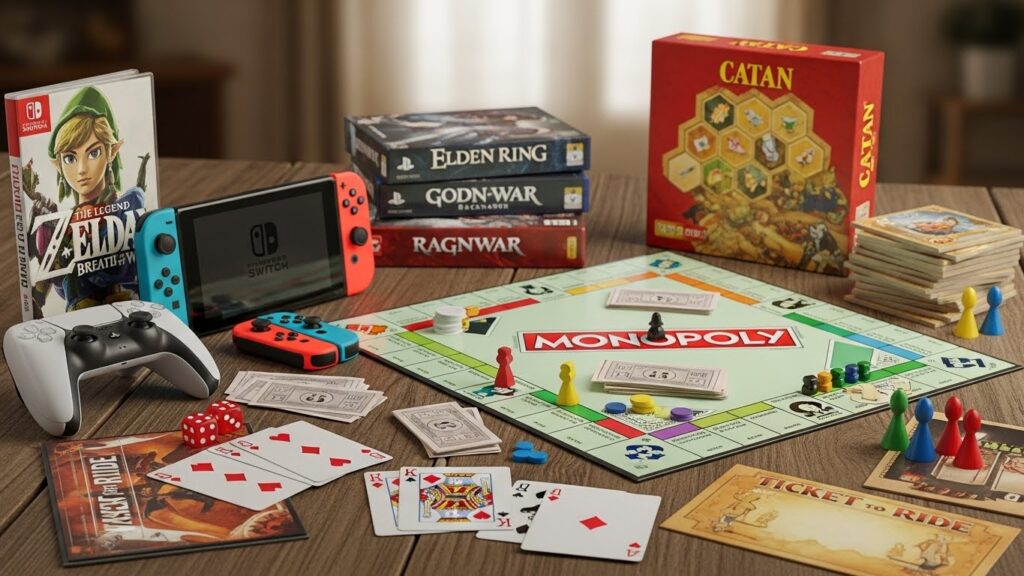
Introduction: The Universal Appeal of Games
Games have been a part of human culture for centuries, from ancient board games like chess and checkers to the immersive digital experiences we know today. Whether it’s a simple card game, a competitive sport, or a complex multiplayer video game, games have always served as a form of entertainment, social interaction, and even education. The gaming industry has evolved dramatically over the years, and with each advancement in technology, the ways we play and experience games continue to change.
Today, gaming has become a global phenomenon that transcends age, gender, and geographical boundaries. From casual mobile games to high-stakes eSports tournaments, the world of gaming has expanded into a multi-billion-dollar industry that shapes culture, society, and even economies. But how did we get here? And where is the world of gaming headed in the future? This blog post explores the fascinating history, current state, and exciting future of games in all their forms.
The History of Games: From Ancient Times to Early Video Games
Games have existed for as long as civilization itself. The earliest games were simple, often requiring little more than objects like stones, sticks, or dice. These games were primarily used for entertainment, social bonding, and even religious or spiritual rituals.
- Board Games and the Birth of Strategy
Board games are some of the oldest known games in human history. Games like Senet, which originated in ancient Egypt around 3100 BCE, and Go, which dates back to ancient China, were not only forms of entertainment but also ways to sharpen strategic thinking and problem-solving skills. Games like chess, which emerged in India around the 6th century, set the foundation for many modern games that require both strategy and foresight.
Board games played a crucial role in social interaction and intellectual development, with many games reflecting the cultural values of the time. They also laid the groundwork for the more complex, rules-based games that would later emerge in the digital age.
- Card Games: The Evolution of Gambling and Strategy
Card games have been another staple of human culture for centuries. The first known playing cards appeared in China during the Tang Dynasty (618–907 AD), and they quickly spread to other parts of the world. Games like Poker, Bridge, and Blackjack became integral parts of both casual and gambling cultures. The rise of casinos in the 20th century further solidified the popularity of card games, particularly as they were adapted for online platforms in the digital age.
The appeal of card games lies in their simplicity and the fact that they require both skill and luck. They’re accessible, easy to learn, and can be played by people of all ages. Whether played for leisure or in competitive tournaments, card games remain an enduring part of the global gaming landscape.
- Early Video Games: The Dawn of Digital Entertainment
The history of video games is relatively young compared to that of board and card games, but it has grown exponentially in a short amount of time. The first video games were simple, pixelated creations, developed on rudimentary computer systems. The 1950s and 1960s saw the creation of games like Tennis for Two and Spacewar!, which laid the foundation for the video game industry.
The breakthrough moment for commercial video games came in the 1970s with the release of Pong, an arcade game that replicated the game of table tennis. This marked the beginning of the arcade gaming era, which saw the rise of iconic titles like Pac-Man, Space Invaders, and Donkey Kong. These early games were simple yet addictive, and they quickly became a part of popular culture.
The Current State of Gaming: A Multi-Billion-Dollar Industry
Fast forward to today, and gaming has become an enormous global industry. The current gaming landscape is vastly different from its humble beginnings, with gaming now being accessible across multiple platforms, from smartphones and consoles to PCs and VR headsets. Here’s a closer look at how gaming has evolved into the global powerhouse it is today.
- The Rise of Mobile Gaming
One of the most significant shifts in the gaming industry has been the rise of mobile gaming. Thanks to the ubiquity of smartphones, gaming has become more accessible than ever. Games like Candy Crush Saga, Clash of Clans, and Pokémon Go have millions of active users around the world. These games are designed to be played in short bursts, making them perfect for people who don’t have the time to dedicate to longer, more complex gaming experiences.
The accessibility of mobile games has expanded the gaming audience, attracting people of all ages and backgrounds. Many mobile games are free-to-play, supported by in-app purchases, which has made them an attractive option for both casual players and developers looking to generate revenue.
- Console Gaming: A Cultural Staple
While mobile gaming has grown significantly, console gaming remains a cornerstone of the gaming industry. Popular consoles like the PlayStation, Xbox, and Nintendo Switch continue to push the boundaries of what’s possible in gaming. These systems offer high-quality graphics, immersive storytelling, and multiplayer experiences that are unmatched in the mobile space.
The gaming console market has seen consistent growth, with the release of new consoles often sparking excitement among gamers worldwide. Recent advancements in console technology, such as 4K resolution, ray tracing, and faster load times, have only heightened the gaming experience. Additionally, the rise of cloud gaming services like Xbox Game Pass and PlayStation Now has made it easier for players to access an expansive library of games without needing to purchase physical discs.
- PC Gaming: A Platform for Serious Gamers
PC gaming has always been considered the gold standard for serious gamers, offering unmatched graphics, customization options, and performance. The rise of online multiplayer games like League of Legends, Fortnite, and Counter-Strike: Global Offensive has made PC gaming a global phenomenon, with millions of players competing against each other in real-time.
The PC gaming market is also home to some of the most visually stunning games, with developers able to fully exploit the power of high-end graphics cards and processors. Additionally, the growing popularity of modding—the act of modifying games to add new content or change gameplay mechanics—has made PC gaming a hub for creative players.
- eSports: The Competitive Side of Gaming
eSports, or electronic sports, has emerged as a multi-million-dollar industry of its own, with professional gamers competing in tournaments for cash prizes, sponsorships, and global recognition. Games like Dota 2, League of Legends, and Overwatch have become the foundation of eSports competitions, attracting millions of viewers worldwide.
eSports tournaments are often broadcasted live on platforms like Twitch and YouTube, and top players can earn substantial amounts of money through sponsorships, advertisements, and tournament winnings. The rise of eSports has also influenced the development of games, with many developers creating titles specifically designed for competitive play.
The Future of Gaming: What Lies Ahead?
As technology continues to advance, the future of gaming looks incredibly promising. We can expect new trends, innovations, and experiences that will revolutionize the way we play and interact with games. Here are some exciting developments on the horizon:
- Virtual Reality (VR) and Augmented Reality (AR)
Virtual Reality and Augmented Reality are two technologies that are poised to transform the gaming world. VR gaming, which immerses players in a completely virtual environment through the use of headsets, is already gaining traction with titles like Beat Saber and Half-Life: Alyx. As the technology continues to improve, we can expect even more realistic and immersive VR experiences.
On the other hand, AR games like Pokémon Go have demonstrated the potential of blending the virtual and real worlds. In the future, we may see even more AR games that use smartphones or AR glasses to overlay digital content onto the physical world, creating new forms of interactive play.
- Cloud Gaming: Gaming Without Boundaries
Cloud gaming is another trend that’s gaining momentum. With services like Google Stadia, Nvidia GeForce Now, and Microsoft xCloud, players can stream games directly to their devices without the need for expensive hardware. This has the potential to make gaming more accessible than ever before, allowing players to enjoy high-quality games on almost any device, from smartphones to smart TVs.
As internet speeds improve and cloud infrastructure becomes more advanced, cloud gaming could become the standard for how games are played in the future.
- Artificial Intelligence (AI) and Procedural Generation
AI is already being used in video games to create smarter enemies, more dynamic environments, and more immersive experiences. In the future, AI could be used to create procedurally generated worlds—vast, open environments that are created on-the-fly by algorithms. Games like Minecraft and No Man’s Sky have already experimented with procedural generation, but as AI improves, these worlds could become more complex and lifelike.
AI could also be used to create personalized gaming experiences, adjusting gameplay, difficulty, and storylines based on individual player preferences and behaviors.
Conclusion: The Timeless Nature of Games
From their ancient origins to the immersive digital experiences of today, games have always been a reflection of human creativity, skill, and imagination. Whether it’s playing a casual mobile game, competing in a professional eSports tournament, or exploring virtual worlds in VR, games offer something for everyone. As technology continues to advance, we can expect the gaming industry to evolve in exciting ways, providing players with new ways to interact with and enjoy games.