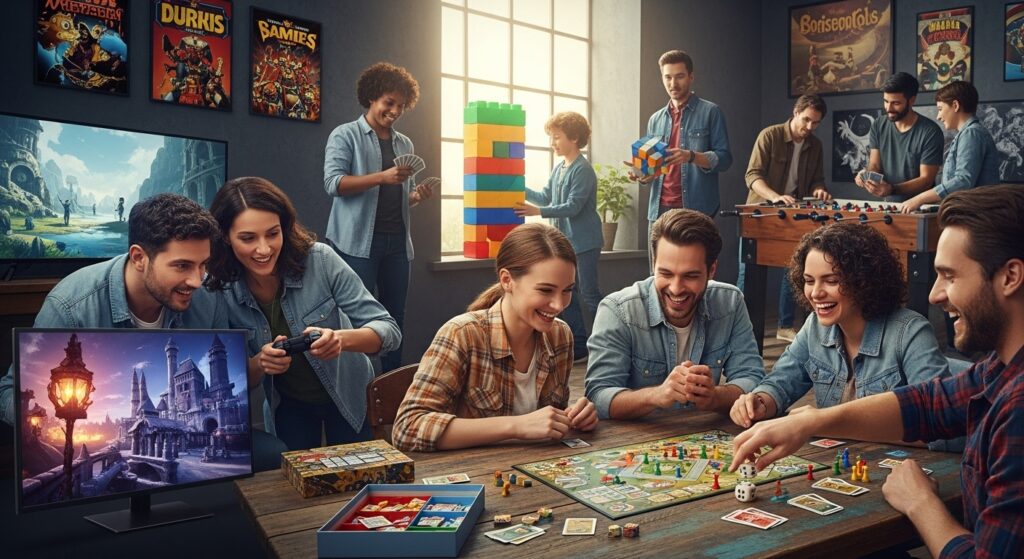
Games have always been a part of human culture, whether as simple childhood pastimes or as complex digital adventures. Over the centuries, the nature of games has evolved dramatically, shaping not only how we play but also how we interact with one another. This blog explores the journey of games from traditional board games to the expansive universe of digital gaming, examining their impact on society, culture, and technology.
The History of Games
Games have existed in various forms for millennia. The earliest recorded games, such as Senet from ancient Egypt or Go from China, were designed for both entertainment and strategic thinking. These early games were usually played on physical boards and involved simple mechanics, yet they laid the foundation for the complex games we enjoy today.
Over time, games became more varied, expanding from board games to card games, outdoor games, and eventually to video games. In the 20th century, the rise of arcade games, followed by the development of home consoles and personal computers, marked a major turning point in the history of gaming. Today, games are not just limited to physical or digital formats—they exist as part of our social, cultural, and even professional lives.
The Rise of Digital Gaming
The digital gaming industry exploded in the late 20th century, driven by the rapid advancement of computer technology. The 1970s and 1980s saw the rise of iconic arcade games such as Pong and Pac-Man, which became cultural milestones. These early video games were simple in design but incredibly addictive, offering a new form of interactive entertainment.
With the advent of home consoles like the Nintendo Entertainment System (NES) and the Sega Genesis, gaming became more accessible to the general public. Titles such as Super Mario Bros. and Sonic the Hedgehog helped to establish video gaming as a mainstream hobby, appealing to both children and adults alike. As the technology improved, so did the complexity and storytelling of games, leading to the development of expansive worlds and intricate narratives.
The Influence of Online Gaming
The internet revolutionized the gaming world in the late 1990s and early 2000s, allowing players to connect with others around the globe. The introduction of multiplayer online games like World of Warcraft, Counter-Strike, and Halo paved the way for a new kind of gaming experience—one that was social, competitive, and cooperative.
Online gaming not only transformed how people played games but also how they interacted with one another. It introduced the concept of online communities, where players could form guilds, participate in virtual tournaments, and build friendships across continents. This connectedness helped turn gaming into a cultural force, leading to the rise of streaming platforms like Twitch and YouTube, where gamers could broadcast their gameplay to thousands of viewers.
Mobile Gaming: A New Era of Accessibility
The advent of smartphones brought gaming to the fingertips of millions. Suddenly, games were no longer confined to consoles or PCs. Mobile gaming allowed players to enjoy a wide variety of games on the go, whether during commutes, breaks, or even while waiting in line.
Casual games such as Angry Birds, Candy Crush, and Clash of Clans became global sensations, attracting people who had never before considered themselves “gamers.” The accessibility and simplicity of mobile games made them widely popular, further cementing gaming as a universal form of entertainment.
Mobile gaming also introduced new business models, particularly free-to-play games with microtransactions. These models allowed players to access most of the game for free, with the option to purchase in-game items or upgrades. While controversial in some cases, this approach revolutionized how games were monetized and has become a staple of the gaming industry.
The Role of Esports in Modern Gaming
In recent years, esports—competitive gaming at a professional level—has risen to prominence, transforming gaming into a legitimate spectator sport. Games like League of Legends, Dota 2, and Fortnite now have massive global audiences, with millions of dollars in prize money, sponsorships, and brand partnerships.
Esports tournaments are broadcast on various platforms, and some of the most popular events, like The International for Dota 2 or the League of Legends World Championship, draw in crowds that rival traditional sports events. The competitive nature of esports has also led to the establishment of professional leagues, collegiate competitions, and career opportunities for skilled gamers.
The success of esports has helped to validate gaming as more than just a form of entertainment—it’s now a career path for some, with gaming influencers and professional players making a living from their passion.
The Social Impact of Games
Games, whether digital or physical, have always had a profound impact on society. They provide entertainment, foster creativity, and often bring people together. Board games have been a traditional way for families to bond, while digital games offer new opportunities for collaboration and competition.
One of the key aspects of modern gaming is its ability to create social connections. Online multiplayer games enable people to form virtual communities, where they can interact, strategize, and even build lasting friendships. These connections go beyond mere gameplay and can extend into real-life interactions, creating a global network of like-minded individuals.
Furthermore, games have been used as educational tools, promoting problem-solving, critical thinking, and teamwork. Serious games and educational apps are increasingly popular in classrooms, where games are used to teach subjects ranging from mathematics to history.
The Future of Gaming
Looking to the future, the gaming industry shows no signs of slowing down. Virtual reality (VR) and augmented reality (AR) are poised to revolutionize the way we experience games, offering more immersive and interactive environments. Imagine stepping into a game world, feeling the virtual environment with your hands, and interacting with other players in real-time—all without ever leaving your home.
Additionally, the continued development of cloud gaming platforms, like Google Stadia and Microsoft’s xCloud, may make gaming even more accessible, allowing players to stream games to any device without the need for expensive hardware. These technologies will likely shape the next generation of gaming experiences.
Conclusion
Games have evolved from simple pastimes to powerful cultural and technological forces. From the early days of board games to the rise of online and mobile gaming, the industry has continuously pushed boundaries and adapted to new technologies. Today, games are more accessible, social, and competitive than ever before. As we look toward the future, gaming promises to remain a dynamic and influential part of our lives, offering entertainment, connection, and even career opportunities. Whether you’re a casual player or a professional gamer, the world of games is vast, exciting, and full of endless possibilities.