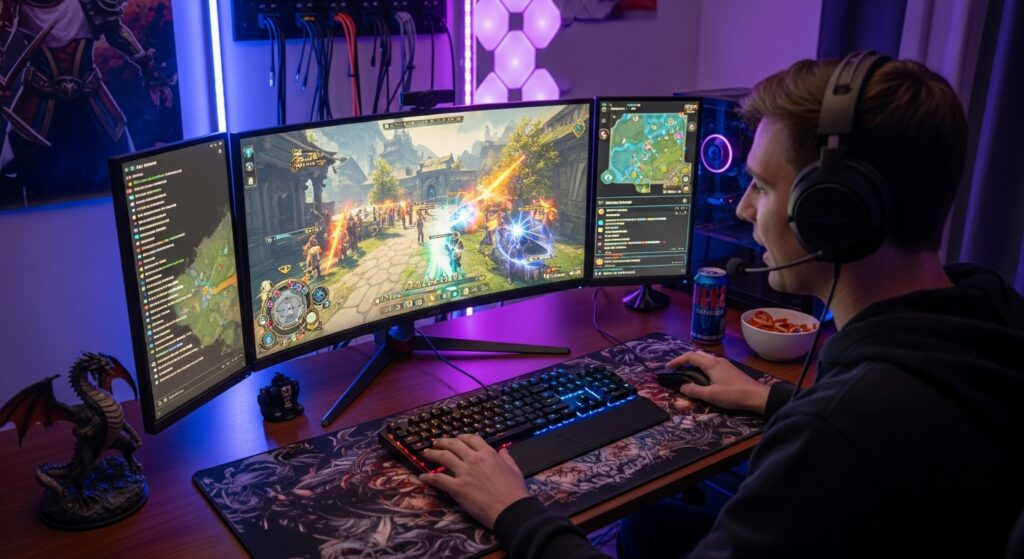
Gaming has evolved from being a niche pastime to becoming one of the most influential and profitable entertainment industries in the world. With advancements in technology, changes in social dynamics, and the rise of new platforms, the gaming experience has transformed dramatically over the decades. This blog post will explore the history, growth, and future of gaming, diving into its evolution and the factors that have shaped the gaming landscape.
The Early Days: Arcade Games and the Birth of Home Consoles
The history of gaming can be traced back to the 1950s, though it wasn’t until the 1970s that video games started to become a cultural phenomenon. The first widely recognized arcade game, Pong, was introduced in 1972 by Atari. This simple yet addictive table-tennis simulator became a smash hit, paving the way for the video game industry. Arcades began popping up in various locations, and soon, video gaming became synonymous with socializing and friendly competition.
At the same time, home consoles began emerging. In 1977, Atari released the Atari 2600, which brought video gaming into homes across the world. Unlike arcade games, home consoles allowed users to play games from the comfort of their own living rooms, setting the stage for the next wave of gaming. The early 1980s saw the release of Space Invaders, Pac-Man, and Donkey Kong, which became iconic symbols of the arcade era.
During this period, the gaming industry was still in its infancy, and the potential for growth was virtually untapped. Developers were experimenting with different game mechanics and genres, paving the way for the next wave of innovation.
The 1980s to Early 1990s: The Rise of Personal Computers and 16-Bit Consoles
By the mid-1980s, home consoles had firmly established themselves as a dominant part of the gaming culture. However, it wasn’t just consoles that were shaping the future of gaming; personal computers (PCs) were also gaining ground. The introduction of the IBM PC in 1981 and the Apple Macintosh in 1984 marked the beginning of a new era for gaming. Unlike consoles, PCs offered more complex and immersive experiences due to their superior processing power and graphics capabilities.
The 16-bit era, which began in the late 1980s, marked a major shift in the gaming industry. Consoles like the Sega Genesis and the Super Nintendo Entertainment System (SNES) introduced new levels of sophistication with better graphics, sound, and gameplay mechanics. These consoles enabled developers to create more expansive and engaging games. Super Mario World, The Legend of Zelda: A Link to the Past, and Sonic the Hedgehog became staple titles of this era, each contributing to the growing popularity of console gaming.
Additionally, this period saw the introduction of iconic PC games like Prince of Persia, SimCity, and Doom. The latter, a groundbreaking first-person shooter (FPS), not only helped define a new genre but also pushed the boundaries of multiplayer gaming with its innovative network capabilities. Online multiplayer was still in its infancy, but Doom gave players a taste of what was to come.
The Late 1990s: The Golden Age of 3D Graphics and the Emergence of Online Play
The late 1990s represented a period of exponential growth in both technology and gaming culture. With the advent of 3D graphics, gaming experiences became more immersive than ever before. Consoles like the Sony PlayStation, the Sega Saturn, and the Nintendo 64 were at the forefront of this revolution, offering a new era of gaming that was dominated by 3D environments and characters.
Titles like Super Mario 64, The Legend of Zelda: Ocarina of Time, and Final Fantasy VII defined this era and became classics that are still revered today. These games not only pushed the technical limits of their respective consoles but also established storytelling and narrative as central elements of gaming. The emphasis on 3D environments allowed for richer, more detailed worlds, and players found themselves becoming more invested in the experiences these games offered.
The late 1990s also saw the birth of online multiplayer gaming. The Sega Dreamcast, released in 1999, was one of the first consoles to incorporate built-in internet connectivity, allowing players to engage in online multiplayer games like Phantasy Star Online. This era also saw the rise of PC games like StarCraft, Warcraft III, and Quake III Arena, which popularized online gaming and eSports.
Meanwhile, the rise of PC hardware innovations like 3D graphics cards (e.g., NVIDIA’s Voodoo series) helped to elevate PC gaming to new heights. Half-Life, StarCraft, and Quake ushered in a new era of multiplayer FPS games, and Warcraft III and Age of Empires II established the real-time strategy (RTS) genre as a mainstay in the gaming world.
The 2000s: The Console War and the Rise of MMORPGs
The early 2000s saw the gaming industry grow even larger, as the competition between console manufacturers intensified. Sony, Microsoft, and Nintendo all released new consoles: the PlayStation 2, the Xbox, and the GameCube, respectively. The PlayStation 2 quickly became the best-selling console of all time, thanks to its impressive library of games and the ability to play DVDs, while the Xbox introduced the world to Halo, a game that would become a defining franchise for Microsoft.
It was also during this period that MMORPGs (Massively Multiplayer Online Role-Playing Games) took the gaming world by storm. Games like World of Warcraft, EVE Online, and Guild Wars allowed players to immerse themselves in massive, persistent online worlds where they could interact with thousands of other players. World of Warcraft, in particular, became a cultural phenomenon, with millions of subscribers around the world and a dedicated fanbase.
This era also saw the growth of mobile gaming. While mobile phones had been capable of simple games for years, the release of the Apple iPhone in 2007 and its subsequent App Store revolutionized the way people thought about gaming. Suddenly, gaming was available at the touch of a finger, and developers quickly adapted by creating fun, accessible games that could be played anywhere. Angry Birds, Temple Run, and Fruit Ninja became household names and set the stage for mobile gaming to become a multi-billion-dollar industry.
The 2010s: The Era of Digital Distribution and Virtual Reality
The 2010s saw the gaming landscape shift even further toward digital distribution and online services. Platforms like Steam, PlayStation Network, Xbox Live, and the Nintendo eShop allowed gamers to purchase and download games directly to their consoles or PCs, bypassing physical media altogether. This shift not only changed the way games were sold but also introduced new opportunities for indie developers to showcase their work. Games like Undertale, Hollow Knight, and Celeste became hits, proving that small, independent studios could create games that resonated with players.
This period also marked the rise of free-to-play games, with titles like Fortnite, League of Legends, and Apex Legends dominating the gaming scene. These games introduced the concept of microtransactions and battle passes, allowing developers to continue supporting games after their initial release with new content and updates.
In addition to these trends, the 2010s also saw the introduction of virtual reality (VR) gaming. While VR had been a concept for decades, it was only in the 2010s that technology advanced enough to make VR gaming a viable option. The release of VR headsets like the Oculus Rift, HTC Vive, and PlayStation VR gave players the chance to experience fully immersive, 360-degree environments. Games like Beat Saber, Resident Evil 7 VR, and Half-Life: Alyx showcased the potential of VR gaming, though the technology still had some way to go before becoming mainstream.
The 2020s: Cloud Gaming, AI, and the Future of Interactive Entertainment
As we entered the 2020s, gaming continued to evolve in ways that many couldn’t have imagined a few years ago. The introduction of cloud gaming services like Google Stadia, Microsoft xCloud, and NVIDIA GeForce Now allowed gamers to stream high-quality games directly to their devices without the need for expensive hardware. This shift towards cloud-based gaming opened up new possibilities for how games are played, especially as internet speeds and server technology improved.
Artificial intelligence (AI) also began playing a more significant role in gaming. Games like Cyberpunk 2077 and The Last of Us Part II pushed the boundaries of AI-driven character behavior, creating more dynamic, lifelike NPCs that reacted to player decisions in complex ways. Additionally, AI is being used to generate procedurally generated worlds in games like No Man’s Sky, which offers virtually endless exploration and discovery.
As gaming continues to evolve, the line between traditional gaming and interactive media becomes increasingly blurred. Games like Death Stranding, The Last of Us, and Red Dead Redemption 2 are now often seen as interactive films due to their cinematic storytelling, detailed characters, and immersive worlds. This trend suggests that the future of gaming may involve more crossover with traditional forms of entertainment, leading to new ways for players to experience stories and connect with characters.
Conclusion: The Future of Gaming
The future of gaming is incredibly exciting, with technology advancing at an unprecedented rate. Virtual reality, augmented reality, artificial intelligence, and cloud gaming are all shaping the direction of the industry, and it’s clear that the next generation of games will be more immersive, more interactive, and more connected than ever before. With the rise of eSports, the growth of streaming platforms like Twitch, and the continued expansion of mobile and cloud