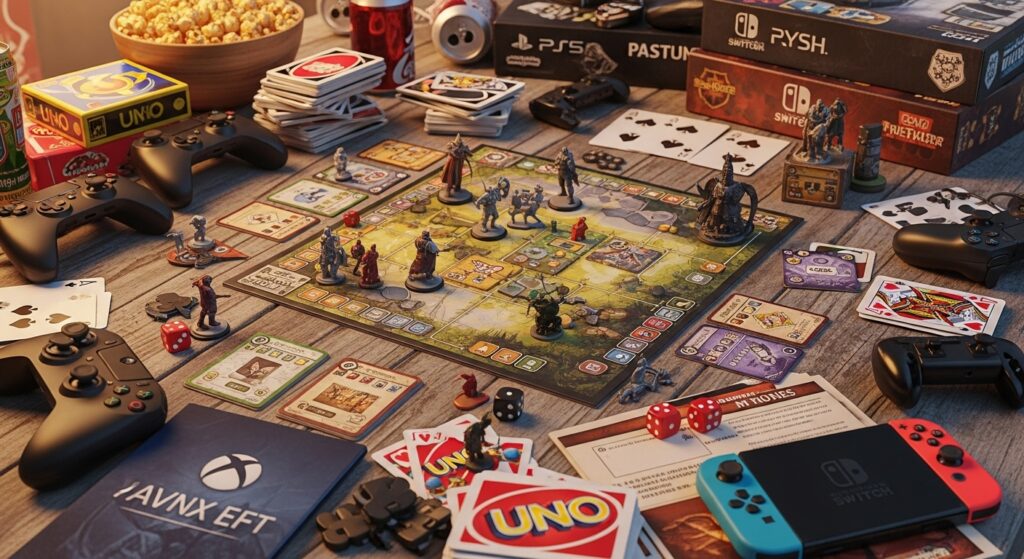
In the 21st century, games have evolved far beyond the simple pleasures of childhood play. Whether you’re a casual gamer, an esports enthusiast, or someone who enjoys the occasional game on their smartphone, the world of gaming offers something for everyone. What was once considered a niche hobby has now grown into a global cultural phenomenon, revolutionizing entertainment and technology. In this blog post, we will explore the diverse world of games, the various types that exist, the rise of gaming communities, and what the future holds for this ever-evolving industry.
The Evolution of Gaming: From Pong to Virtual Reality
The history of video games dates back to the mid-20th century, when the first experiments in electronic entertainment were created. The first commercially successful video game, Pong, released in 1972, marked the beginning of the video gaming industry as we know it. Simple, two-dimensional graphics and basic gameplay introduced a new form of entertainment to the public, but it was just the beginning of what would become a multi-billion-dollar industry.
As technology advanced, so did the sophistication of games. The 1980s and 1990s saw the rise of arcade games like Pac-Man, Space Invaders, and Donkey Kong, which captivated millions of players worldwide. The home console revolution, led by systems like the Nintendo Entertainment System (NES) and the Sega Genesis, brought gaming into the living rooms of families around the world.
The introduction of 3D graphics and powerful game engines in the late 1990s and early 2000s transformed the gaming experience. Games like Super Mario 64, The Legend of Zelda: Ocarina of Time, and Half-Life pushed the boundaries of what was possible in terms of game design, storytelling, and graphics.
Today, the gaming industry has entered a new era. With the advent of virtual reality (VR), augmented reality (AR), and cloud gaming, the gaming experience has become even more immersive and interactive. Players can now experience vast, open-world environments, participate in competitive online battles, or even enter fantastical worlds in ways that were once only dreamed of.
Types of Games: From Casual to Hardcore
Gaming is a broad and diverse medium that caters to a wide range of interests, skills, and platforms. There are several categories of games that appeal to different types of players, from casual gamers who prefer easy-to-pick-up games to hardcore enthusiasts who dedicate hours to mastering complex, competitive titles. Here’s a breakdown of the major types of games in today’s landscape:
1. Action Games
Action games are perhaps the most popular genre, known for their fast-paced gameplay and focus on physical challenges. These games often require quick reflexes, hand-eye coordination, and strategic thinking. Popular action games include titles like Call of Duty, Grand Theft Auto, and Devil May Cry. These games typically involve combat, exploration, and problem-solving, and they often feature rich narratives that keep players engaged for hours.
2. Adventure Games
Adventure games place a stronger emphasis on storytelling, exploration, and puzzle-solving than on action. These games often feature complex narratives with deep characters and immersive worlds. Players are tasked with solving puzzles, completing quests, and exploring environments. Iconic adventure games include The Legend of Zelda, Uncharted, and The Last of Us. The genre has evolved significantly with the rise of open-world games that give players more freedom to explore and interact with the game world.
3. Role-Playing Games (RPGs)
Role-playing games, or RPGs, are known for their in-depth character development, expansive worlds, and often complex narratives. In these games, players assume the role of a character (or group of characters) and make choices that affect the storyline and gameplay. RPGs can be further broken down into sub-genres, including:
- Turn-Based RPGs: These games, such as Final Fantasy and Persona, feature turn-based combat systems where players take turns performing actions.
- Action RPGs: Games like The Witcher 3 and Dark Souls blend action elements with RPG mechanics, offering real-time combat and immersive world-building.
- MMORPGs (Massively Multiplayer Online Role-Playing Games): These games, like World of Warcraft and Final Fantasy XIV, allow players to interact in large online worlds with thousands of other players.
4. Strategy Games
Strategy games emphasize planning, tactics, and resource management. They require players to think critically and make decisions based on limited resources, often with long-term consequences. There are two main types of strategy games:
- Real-Time Strategy (RTS): These games, such as StarCraft and Age of Empires, feature real-time gameplay, where players must make decisions on the fly while managing their resources and military forces.
- Turn-Based Strategy (TBS): Games like Civilization and XCOM use turn-based mechanics, allowing players to take their time to think through each move.
5. Simulation Games
Simulation games aim to replicate real-world activities and experiences. These games often allow players to experience everything from running a farm (Stardew Valley) to piloting a plane (Microsoft Flight Simulator). Life simulation games like The Sims allow players to control virtual people and guide them through life’s various stages, while city-building games like SimCity focus on urban planning and resource management.
6. Sports and Racing Games
Sports and racing games are designed for players who enjoy competitive, fast-paced gameplay. These games simulate real-world sports, such as football (FIFA), basketball (NBA 2K), and racing (Gran Turismo). They allow players to control athletes, teams, or vehicles and compete in various events. Many sports games also offer online multiplayer modes, where players can compete against each other in real time.
7. Puzzle and Casual Games
Puzzle games are designed to challenge players’ cognitive abilities. These games often focus on logic, pattern recognition, and problem-solving. Popular puzzle games include Tetris, Candy Crush, and Portal. Casual games, on the other hand, are typically simpler and more accessible, designed for quick play sessions. These games often have easy-to-learn mechanics and can be played on mobile devices, making them perfect for on-the-go entertainment.
The Impact of Gaming on Society
Games have become more than just a form of entertainment—they’ve become a cultural force that influences how we interact, socialize, and even work. The rise of multiplayer online games and esports has created a global community of players who connect through shared interests and experiences. Here are some of the ways gaming has impacted society:
1. The Rise of Esports
Esports, or competitive gaming, has exploded in popularity over the past decade. Professional gamers now compete in tournaments for large cash prizes, and these events are streamed live to millions of viewers on platforms like Twitch and YouTube. Esports has become a legitimate career path for many young gamers, with organizations, sponsorships, and even college scholarships dedicated to competitive gaming.
Games like League of Legends, Dota 2, and Counter-Strike: Global Offensive have become staples of the esports world, attracting global audiences and turning top players into celebrities. The growth of esports has even led to the inclusion of competitive gaming in the upcoming Olympic Games, signaling a new era of digital sports.
2. Social Connections and Communities
Online gaming has made it easier than ever to connect with people around the world. Multiplayer games, whether they’re cooperative (Minecraft, World of Warcraft) or competitive (Fortnite, Apex Legends), have fostered vibrant online communities where players can form lasting friendships, join guilds or teams, and participate in global events.
Gaming has also created opportunities for social interaction beyond just playing the game. Social platforms like Discord allow players to chat with friends, join voice channels, and coordinate in-game strategies. Through these platforms, players can share their passion for gaming, discuss strategies, or simply hang out with others who share their interests.
3. Educational Benefits
Video games are also increasingly being used as educational tools. Games that promote problem-solving, critical thinking, and creativity can help children and adults alike develop important cognitive skills. Games like Minecraft and Kerbal Space Program have been used in classrooms to teach subjects ranging from mathematics and science to history and literature.
Some games are specifically designed to teach new skills or reinforce educational content. Games like Duolingo teach languages through interactive, gamified lessons, while others, like SimCity and Civilization, teach concepts of economics, history, and urban planning.
4. The Future of Gaming Technology
As gaming technology continues to evolve, the possibilities for the future of gaming seem endless. Virtual reality (VR) and augmented reality (AR) are two major advancements that are reshaping the gaming landscape. VR games immerse players in fully 3D worlds, offering unparalleled levels of interactivity and realism. Meanwhile, AR games like Pokémon Go integrate digital elements into the real world, offering new ways to interact with both virtual and physical environments.
The next frontier of gaming may also involve artificial intelligence (AI), which could create smarter, more responsive game environments. AI-driven characters and dynamic storylines could adapt to a player’s choices, creating more personalized and engaging gaming experiences.
Conclusion: A Diverse and Thriving Industry
From the early days of Pong to the complex, immersive experiences offered by modern VR games, the gaming industry has undergone a remarkable transformation. Today, games are a vital part of our entertainment landscape, offering a diverse range of experiences that cater to players of all ages, backgrounds, and interests.