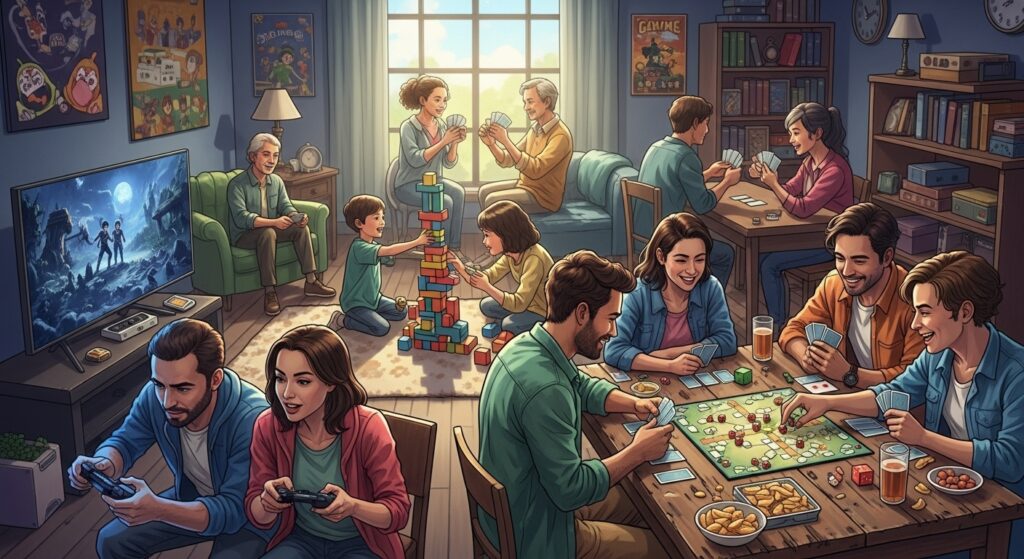
Introduction: The Universal Language of Games
Games are one of the oldest and most universal forms of human expression. Long before screens and controllers existed, people played games with stones, sticks, and imagination. From ancient board games like Senet in Egypt to the modern world of digital gaming, the act of play has always been a vital part of human life. Games transcend language, culture, and age—they are a form of communication that connects people through creativity, competition, and collaboration.
Today, the gaming world is vast and diverse. It encompasses everything from simple puzzle apps on mobile phones to massive online multiplayer universes that bring together millions of players. Gaming has evolved into a cultural powerhouse that influences art, technology, education, and even social behavior. Understanding the importance of games means looking beyond entertainment to see how they shape who we are and how we live.
The Evolution of Gaming: From Simple Fun to Complex Worlds
The journey of gaming is a fascinating story of innovation and imagination. Early games were simple forms of play meant for amusement or social bonding. Ancient civilizations used games as a way to teach strategy, develop coordination, and pass the time. As technology advanced, so did the nature of games.
The twentieth century saw the birth of electronic gaming. The first video games, like Pong and Space Invaders, were revolutionary for their time, introducing people to interactive digital entertainment. The 1980s and 1990s brought home consoles like the Nintendo Entertainment System and the Sega Genesis, making gaming a household experience. Arcade halls filled with flashing lights and electronic sounds became cultural landmarks of joy and competition.
By the early 2000s, gaming had entered a new era of realism and connectivity. The internet allowed players to compete and cooperate globally, creating a sense of virtual community. Today’s gaming industry is built on immersive storytelling, advanced graphics, and social interactivity. Virtual reality, augmented reality, and artificial intelligence have transformed games into experiences that blur the line between fiction and reality.
The Psychology of Play: Why We Love Games
Games tap into the very essence of human motivation. They provide challenges, goals, and rewards that engage both our intellect and emotions. Psychologists have long studied why people play games, and the answers reveal deep insights into human behavior.
At the core, games satisfy our need for achievement and mastery. When players complete levels, solve puzzles, or defeat opponents, they experience a sense of accomplishment that boosts confidence. Games also provide a safe space for experimentation and failure. Unlike real life, failure in games carries no lasting consequences—it is an opportunity to learn, adapt, and try again.
Another reason people love games is the sense of escape they offer. In a world full of stress and routine, games transport players into alternate realities where they can be heroes, strategists, or creators. This immersion provides not only entertainment but also emotional relief and mental relaxation.
Social connection is another key factor. Multiplayer games allow people to collaborate and communicate with others across the globe. Friendships and communities often form through shared gaming experiences, making it a digital social hub in the modern age.
Games as a Tool for Learning and Growth
Beyond entertainment, games have proven to be powerful tools for education and personal development. Educational games have transformed the way children and adults learn by making complex subjects interactive and engaging. Math, science, and history can become exciting adventures when taught through play.
Video games also enhance cognitive skills such as problem-solving, spatial awareness, and multitasking. Strategy games teach planning and decision-making, while puzzle games improve memory and logic. Even action games have been shown to sharpen reflexes and hand-eye coordination.
Moreover, games teach resilience and perseverance. Players learn that success often comes after multiple failures—a lesson that applies to real life as much as virtual challenges. This mindset fosters patience, focus, and adaptability.
In professional fields, simulation games have become valuable training tools. Pilots, doctors, and engineers use advanced simulation programs to practice real-world scenarios safely. This fusion of gaming and practical learning demonstrates how play can have a serious and positive impact on human progress.
The Social and Cultural Impact of Games
Gaming has evolved into a cultural phenomenon that influences how people express themselves and interact with the world. Video game characters, stories, and aesthetics have become part of mainstream culture. From cosplay events and conventions to streaming platforms where players share their experiences, gaming has built a massive global community.
Games have also become a storytelling medium on par with films and literature. Titles like The Last of Us, Red Dead Redemption, and Journey showcase emotional narratives, artistic design, and philosophical depth. Through these experiences, players engage not only in action but also in reflection and empathy.
Furthermore, games have bridged cultural gaps. Players from different countries and backgrounds come together in shared virtual spaces, learning from one another’s perspectives. This global interaction fosters cultural exchange and understanding, breaking down barriers that once separated people.
The Economics of the Gaming Industry
The gaming industry is now one of the most profitable entertainment sectors in the world, surpassing music and film combined. Its growth has created millions of jobs in game development, design, marketing, and e-sports. Major studios and independent developers alike contribute to a thriving economy driven by creativity and technology.
The rise of mobile gaming has made games accessible to almost everyone. Free-to-play models and digital marketplaces allow developers to reach audiences worldwide. This democratization of gaming has led to an explosion of diversity in both game genres and player demographics.
E-sports has also emerged as a professional field, with tournaments offering massive prize pools and global recognition. Competitive gaming has given rise to new celebrities, fan communities, and even scholarship opportunities for young players. The economic potential of gaming continues to expand, shaping the digital economy of the future.
The Technological Revolution in Gaming
Technology has been the driving force behind gaming’s rapid evolution. Modern gaming engines, artificial intelligence, and realistic physics simulations have created experiences that are visually stunning and emotionally engaging. Cloud gaming has made high-end games accessible without expensive hardware, further expanding accessibility.
Virtual reality and augmented reality are redefining immersion by placing players directly into digital worlds. These technologies allow for new forms of interactivity, where physical movement and digital environments blend seamlessly. The future promises even more groundbreaking innovations, from holographic gaming to neural interfaces that connect directly to the brain.
Artificial intelligence is also transforming game design. AI-driven characters can now respond intelligently to player actions, creating dynamic and personalized experiences. Procedural generation allows for infinite possibilities, ensuring that no two gaming experiences are ever the same.
The Challenges Facing the Gaming World
Despite its many achievements, the gaming industry faces several challenges. One of the major concerns is the issue of gaming addiction. Excessive play can affect mental health, social relationships, and productivity. Game developers and communities are now promoting healthy gaming habits and encouraging balance.
Another challenge is inclusivity and representation. Historically, gaming has sometimes lacked diversity in its characters and narratives. However, modern developers are increasingly embracing inclusivity, creating games that reflect different cultures, genders, and identities.
Cybersecurity and online harassment are also pressing issues. With the growth of online gaming communities, maintaining safe and respectful environments is essential. Developers are introducing better moderation tools, reporting systems, and educational initiatives to make gaming a positive space for all.
The Future of Games: Where Innovation Meets Imagination
The future of gaming is limitless. As technology continues to evolve, so will the possibilities of play. Artificial intelligence, cloud computing, and virtual reality will push gaming into new frontiers. Imagine worlds that adapt to your emotions, games that learn from your behavior, and experiences that merge seamlessly with daily life.
The concept of the metaverse—a shared, persistent virtual universe—may become the next great leap for gaming. In this space, players can create, explore, and interact in ways never before imagined. The line between gaming and social interaction will continue to blur, making games a central part of both entertainment and everyday experience.
Sustainability will also play a major role in the future of gaming. Developers are exploring energy-efficient designs, ethical production practices, and inclusive storytelling. The goal is to make gaming not only more advanced but also more responsible.
Conclusion: Games as the Art and Science of Human Experience
Games are far more than sources of amusement. They are reflections of human creativity, intelligence, and emotion. From ancient pastimes to futuristic simulations, gaming has always been a mirror of our desire to learn, connect, and explore.
As technology and imagination continue to evolve, games will remain a powerful tool for storytelling, education, and innovation. They unite people across the globe, challenge our minds, and enrich our lives in countless ways.
In the end, the true power of games lies not in the pixels on the screen but in the experiences they create and the connections they inspire. Whether played on a board, a console, or in virtual reality, games remind us of something timeless—the joy of discovery, the thrill of challenge, and the endless potential of play.