Introduction
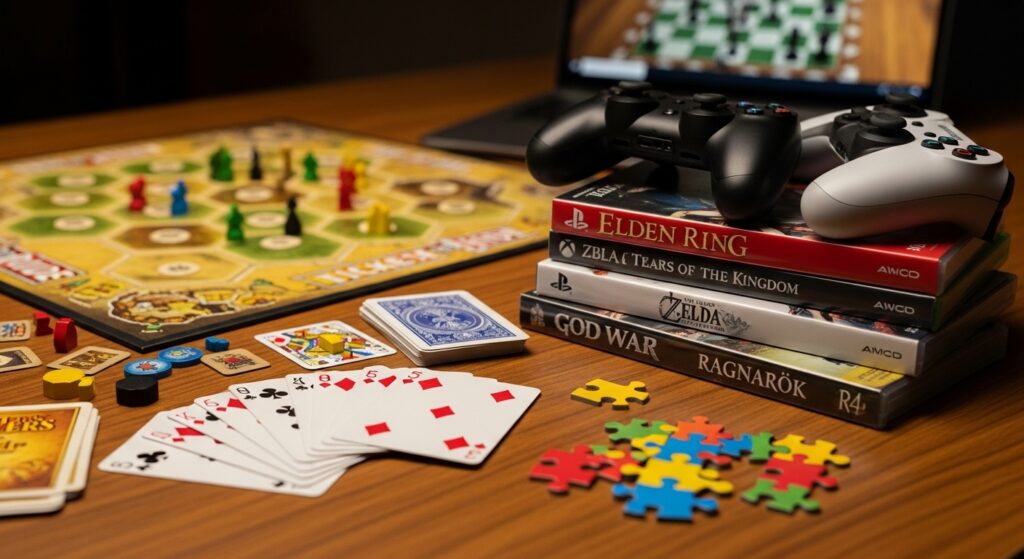
Games have always been a part of human civilization. From the ancient strategy of chess to the fast-paced world of modern digital gaming, the act of play has evolved into something far more significant than mere entertainment. Games today influence our thinking, emotions, and even the way we interact with the world. Whether played on a board, on a field, or through a screen, games continue to be one of the most powerful mediums for learning, creativity, and connection. This blog explores how games have evolved, why they matter, their psychological impact, and how they are shaping the future of society.
The Ancient Roots of Gaming
The history of games dates back thousands of years. Long before the invention of modern technology, people played games as a means of competition, relaxation, and social bonding. Ancient civilizations like Egypt, Mesopotamia, and China developed early forms of board games, many of which reflected their cultures and philosophies.
Chess, for example, originated as a strategic simulation of war, emphasizing foresight and patience. Similarly, games like Go in ancient China symbolized balance and harmony, teaching players deep philosophical lessons. These traditional games were not only pastimes but also tools for sharpening intellect and fostering community ties.
The essence of play, therefore, is deeply human. It reflects our desire to challenge ourselves, to learn, and to connect with others through structured yet creative forms of interaction.
The Evolution into Modern Gaming
As technology advanced, so did our games. The 20th century introduced a digital revolution that transformed simple play into immersive experiences. The first video games were simple pixel-based interactions, such as Pong and Space Invaders, yet they laid the foundation for a massive entertainment industry.
Over time, gaming evolved from 2D to 3D environments, allowing for more complex storytelling and visual depth. The rise of consoles like PlayStation, Xbox, and Nintendo brought gaming into homes, making it a mainstream form of entertainment. These platforms not only improved accessibility but also expanded the diversity of game genres, from adventure and racing to puzzle and strategy games.
Today, games are cinematic experiences. They blend art, technology, and narrative in ways that captivate millions. Games like The Legend of Zelda, God of War, and Minecraft have become cultural phenomena, shaping how people perceive creativity and storytelling in digital spaces.
The Psychology of Play
At its core, gaming taps into fundamental psychological principles. Humans are naturally driven by goals, rewards, and challenges—all of which games provide. The sense of accomplishment after completing a difficult level or unlocking a rare achievement triggers a rush of dopamine, the brain’s feel-good chemical.
Games also enhance cognitive functions. Strategy and puzzle games improve problem-solving skills, reflex-based games sharpen hand-eye coordination, and simulation games teach resource management. Furthermore, narrative-driven games can foster empathy by allowing players to experience life through different perspectives.
Gaming also serves as a powerful tool for relaxation and emotional regulation. Many people use games as an escape from stress, finding comfort in virtual worlds that offer control and creativity. However, balance remains key; while gaming can be therapeutic, excessive play can lead to addiction or social withdrawal.
The Rise of Online and Social Gaming
In the past two decades, online gaming has redefined how people connect. Multiplayer games allow users to team up or compete with players from all over the world. Titles like Fortnite, Call of Duty, and Among Us have transformed gaming into a social activity where teamwork, communication, and collaboration are essential.
These online environments are not just about winning; they are about forming communities. Many players build long-lasting friendships through gaming, often communicating through voice chat or virtual avatars. Online gaming has become a modern social hub where players can meet, interact, and create memories together.
Social gaming has also made its way into mobile platforms. Casual games such as Clash of Clans and Candy Crush have turned mobile phones into mini gaming consoles, allowing players to engage anytime, anywhere. This accessibility has made gaming more inclusive, reaching audiences across all age groups and backgrounds.
Games as Tools for Learning and Development
Games are not just entertainment—they are powerful educational tools. Educational games designed for children can enhance learning in subjects like mathematics, language, and science. Interactive gameplay keeps learners engaged, making education both fun and effective.
Serious games, designed for professional training, are used in industries such as healthcare, aviation, and military strategy. These games simulate real-world scenarios, helping individuals practice decision-making and problem-solving without real-world consequences.
Moreover, games promote creativity. Building or simulation games like Minecraft and The Sims encourage players to think imaginatively, experiment with ideas, and develop their design and planning skills. Such games foster innovation by turning abstract concepts into tangible creations.
The Cultural Influence of Games
Games have become an integral part of global culture. Just as movies and music define generations, games now do the same. Iconic characters like Mario, Sonic, and Lara Croft are recognized across the world, symbolizing the universality of play.
Gaming influences fashion, music, and even language. Terms like “level up” and “respawn” have entered everyday conversation, reflecting the cultural penetration of gaming concepts. Game soundtracks are celebrated for their emotional depth, and fan communities often produce art, stories, and music inspired by their favorite games.
Furthermore, storytelling in modern games has reached literary and cinematic quality. Games like The Last of Us and Red Dead Redemption 2 deliver emotional narratives that explore morality, loss, and survival. These interactive stories allow players to shape outcomes, giving them agency and emotional investment unlike any other medium.
Esports and the Professionalization of Play
What was once considered a hobby has now become a global sport. Esports, or competitive gaming, has transformed gaming into a professional career path. Players compete in tournaments watched by millions, earning sponsorships, fame, and financial rewards.
Esports organizations operate much like traditional sports teams, complete with coaches, analysts, and dedicated training routines. This professional ecosystem has turned gaming into a billion-dollar industry that rivals traditional sports like football and basketball in viewership and cultural impact.
The appeal of esports lies in its inclusivity. Anyone with skill and dedication can compete, regardless of physical ability or background. This democratization of competition is one of the most inspiring aspects of the gaming world.
The Economic Power of the Gaming Industry
The gaming industry is now one of the most profitable sectors in entertainment, surpassing music and film combined. From indie developers to massive studios, gaming fuels innovation and creativity. It has created millions of jobs worldwide, ranging from programmers and designers to writers and artists.
In addition to direct game sales, streaming platforms and content creation have opened new revenue streams. Gamers can build audiences, share experiences, and even earn a living through digital content. This new digital economy thrives on creativity, community, and technology, illustrating the limitless potential of the gaming world.
The Future of Gaming: Innovation and Imagination
The future of games is bound to be even more extraordinary. Technologies like Virtual Reality, Augmented Reality, and Artificial Intelligence are expanding the possibilities of gameplay. VR immerses players in fully interactive worlds, while AR blends digital elements with real-life environments.
Artificial Intelligence enhances gaming by creating more adaptive enemies, personalized stories, and realistic environments. Cloud gaming allows players to access high-quality games without powerful hardware, making gaming more accessible than ever.
In the future, we may see games that respond to emotions through biometric sensors, adaptive storytelling that changes based on decisions, and AI-generated worlds that evolve with each playthrough. These innovations will continue to push the limits of imagination and redefine what it means to play.
Conclusion
Games are far more than diversions; they are powerful reflections of human creativity, intelligence, and emotion. They teach, connect, and inspire us in ways that transcend traditional boundaries of entertainment. From ancient board games to futuristic simulations, the power of play remains a universal force that drives curiosity and innovation.
As technology evolves, so too will the art of gaming. Yet, at its heart, the essence of games will remain the same—the joy of discovery, the thrill of challenge, and the satisfaction of connection. Games are not just a way to pass time; they are a way to understand ourselves, our culture, and our ever-changing world. The power of play, in all its forms, continues to shape the future of humanity—one game at a time.